


CSI ISS Program: Sustainment that keeps the fleet modernized


The Halifax-class frigates have been an important part of the Royal Canadian Navy for more than 40 years. These multi-role patrol frigates rely on a Canadian-made combat system that has evolved with client needs and technological progress since its inception.
In November 2024, Canada awarded Lockheed Martin Canada the Halifax-class Combat System Integration In-Service Support (CSI ISS) contract until 2045. This extends a strong, 30-year legacy of trusted partnership in Canada’s defence industry, and our key customer, the Royal Canadian Navy.


Tried and Tested Success
With the operational software now entering Version 11 development, the CSI ISS program builds on a combat system that has evolved continuously to meet the realities of modern naval operations. Version 10 was an unqualified success, ensuring its operational readiness in advance of its deployment in HMCS Ville de Quebec in support of the HMS Prince of Wales Task Group deployment to the South China Sea this past summer. These deployments show what continued investment in sustained modernization makes possible: Canadian-developed systems performing in multinational contexts in threat environments around the globe.
For Program Manager Jack, who has led the CSI ISS program since 2010, success comes down to “delivery of successful CMS 330 version releases that consistently meet operational and training requirements and exceed customer expectations.” Measuring success is about consistent performance in real conditions.
Coast-to-coast Services
More than 160 Lockheed Martin employees are supporting this program nationwide. Personnel are based at CFB Halifax, CFB Esquimalt in Victoria, DND facilities in Ottawa, Lockheed Martin Dartmouth MATTS facility, and Lockheed Martin headquarters in Kanata.
Their work covers everything from software development and systems engineering to integration of new weapons and sensors. Jack credits the team’s shoulder-to-shoulder presence with the navy as testament to the program’s resilience. “Our embedded presence with the customer fosters strong partnerships, supporting mutually agreed upon enhancements to the system, ensuring those shared goals are met and solutions are delivered accurately.” What he values most, however, is collaboration and “creating a culture where the ISS program listens to our customer, works with them, and responds with agility and purpose.”


Leading with Collaboration
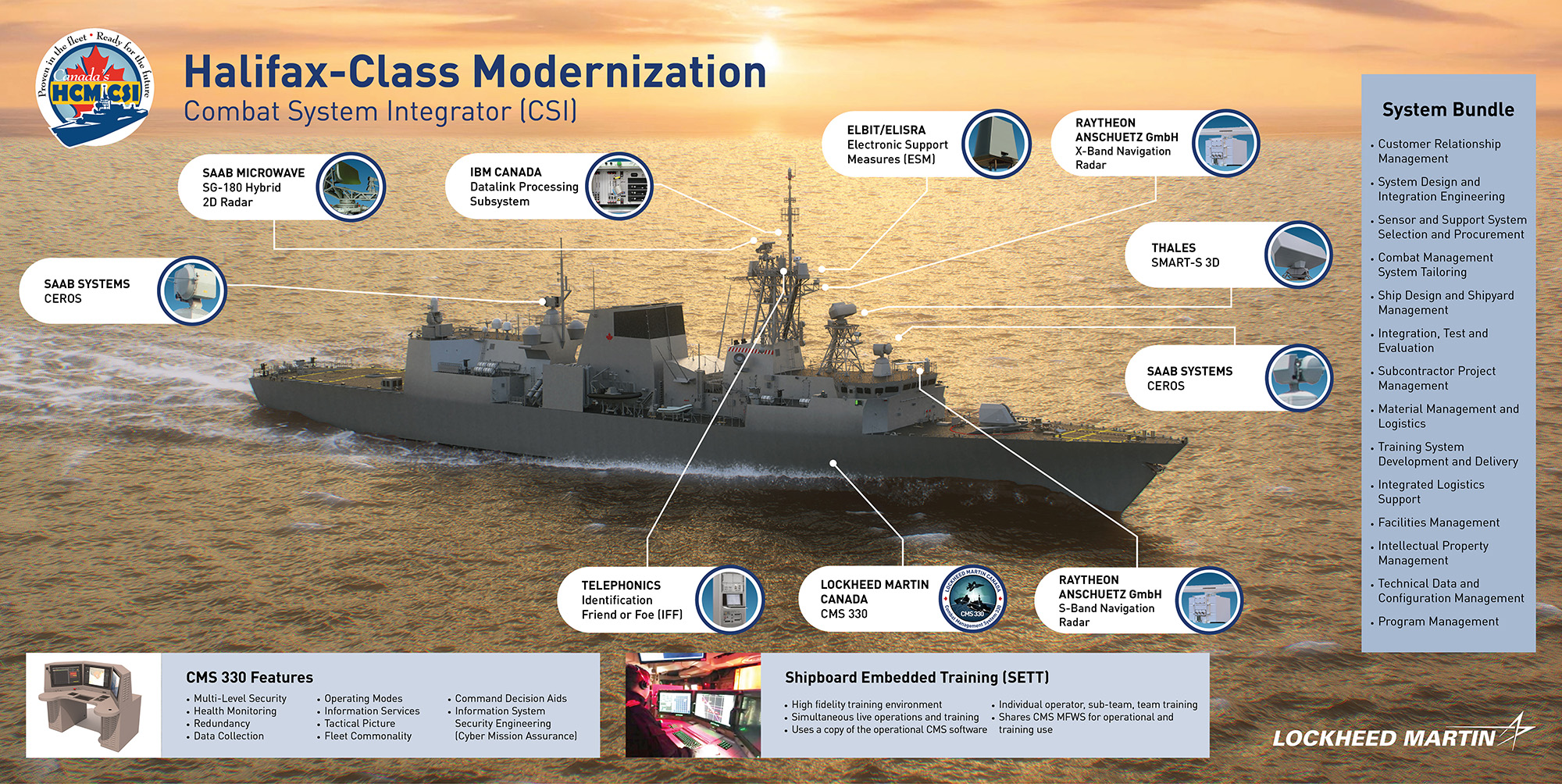
The Halifax-class frigates are designed for multi-role missions, from securing Canadian waters to working with international partners. The CMS 330 system keeps these missions operational and current, allowing for ongoing upgrades and up-to-date training. Sustaining the system domestically allows the Royal Canadian Navy to benefit from immediate access to skilled experts, local infrastructure, and rapid-response capability when it matters most. “This creates Canadian jobs, reinforces operational readiness, and enables rapid response to national priorities” Jack explains.
Sustainment for the Future
The longstanding success and partnership of the CSI ISS program shows mission success through constant collaboration, communication, and trust within the team and with our customers. The CSI ISS program will continue to deliver that mission success: sustaining today’s Halifax-class frigates while laying the foundation for the future of Maritime defence.

HMCS Vancouver steams in close formation as one of 40 ships and submarines representing 13 international partner nations during Rim of the Pacific 2016. (U.S. Navy Combat Camera photo by Mass Communication Specialist 1st Class Ace Rheaume/Released)
