


Solving the Hardest Problems Ahead of Need
How we help our customers address emerging threats through advanced technology, cross-domain integration and strategic collaboration.


A commander watches a screen fill with signals. Some are routine. Some are threat warnings. One could mark a low-cost drone probing a defended perimeter. Another could point to a submarine moving quietly beneath contested waters. Far above, satellites and sensors are feeding in data at machine speed, while the window to act keeps shrinking. In that moment, the challenge is not simply seeing the threat. It is understanding it fast enough, connecting the right systems and responding with the right effect at the right cost.
This is the kind of challenge modern defense increasingly demands — and the kind of problem we help solve ahead of need.
It also means recognizing that the future fight will not be won by bespoke systems operating alone. Missions will increasingly rely on integrated architectures that connect sensing, communications, decision-making, platforms and weapons in real time. As warfare becomes faster and more data-driven, we are aligning strategic investments to focus our operational analysis, technology development, and demonstrations around our customers’ hardest missions.
That’s where we’re working differently. We map future missions holistically using our deep operational knowledge, long-standing customer relationships, wargaming and expertise across air, land, sea, space and cyber. We’re focused on understanding what our customers are asking for today and what the mission will require tomorrow. That means looking at the full mission problem — operationally, technically, logistically and economically — and rapidly delivering improved outcomes, reduced cost and accelerated capability at scale.
Building solutions today for the challenges of tomorrow
That approach is already producing tangible proof points across some of the most urgent defense challenges.

Undersea warfare: extending awareness with LampreyMMAUV™ vehicles
The undersea battlespace is growing more contested as adversaries invest in quieter submarines, autonomous underwater systems and more sophisticated sensing.
Our Lamprey Multi-Mission Autonomous Underwater Vehicle (LampreyMMAUVTM vehicles) is one example of how we’re addressing undersea challenges — expanding reach, persistence and flexibility.

Counter-UAS: finding and defeating low-cost threats with NetSense™
Low-cost drones can create serious intelligence and security problems, and in large numbers can impose disproportionate costs on defenders. Defeating UAS is critical, but it must be done at scale and affordably.
Our NetSense solution addresses that challenge by using existing infrastructure, advanced signal processing and artificial intelligence to detect and track UAS threats. That means helping identify suspicious activity earlier, tracking the threat and alerting customers with accurate information so they can make informed decisions quickly.

Layered Homeland Defense: integrating against a full spectrum of threats
We’re bringing decades of integration experience to connect mission areas for layered homeland defense, including the best capabilities from across industry into a coherent architecture. In the space domain, we’re augmenting the Space Based Infrared System (SBIRS), which has been the backbone of our nation’s early missile warning system for more than a decade. Our Next-Gen GEO (NGG) will provide enhanced sensing capabilities to detect advanced missile threats, including hypersonic weapon systems. The data received from these space-based systems move rapidly across the interconnected architecture to critical systems.
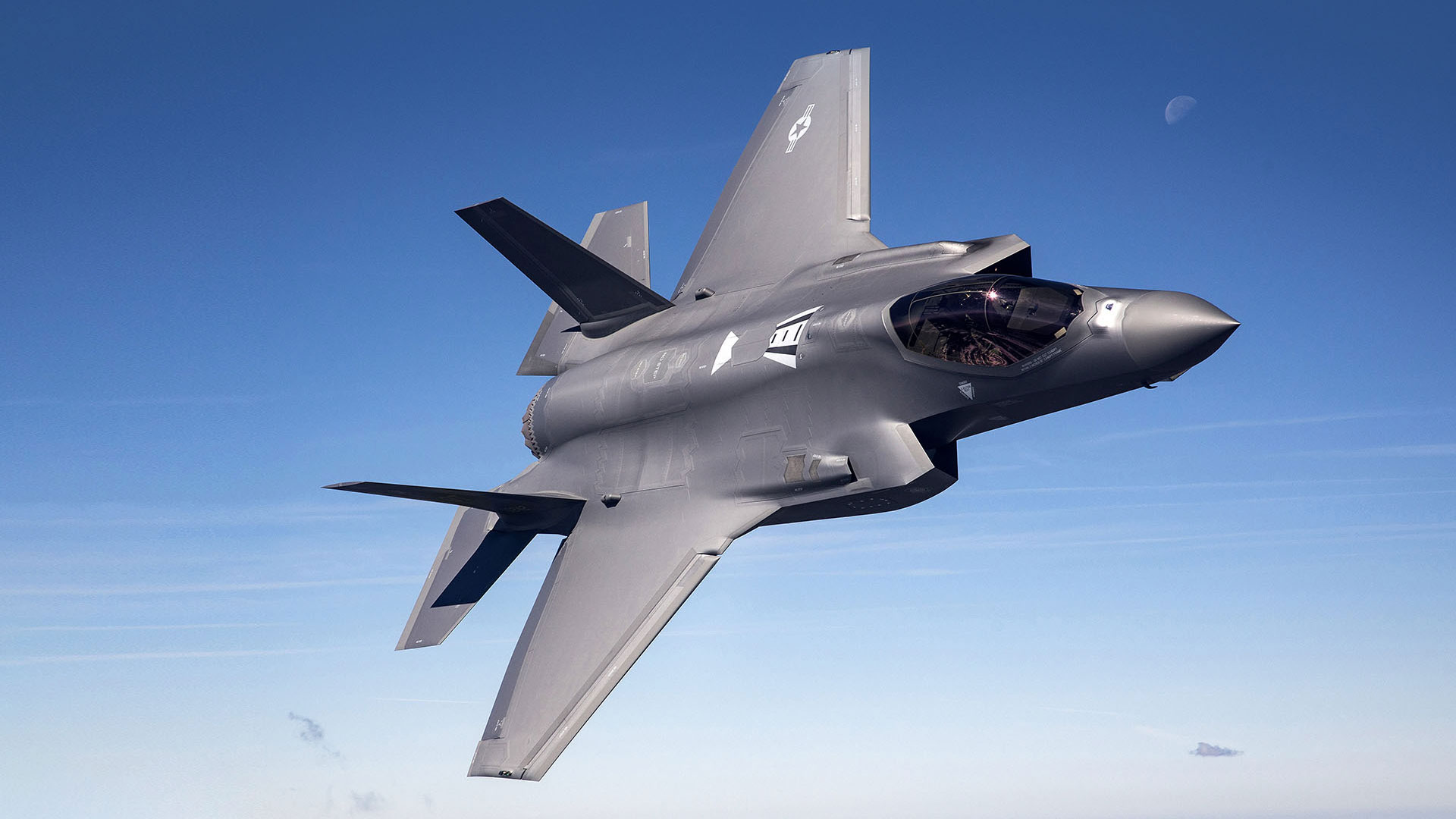
And we're digitally connecting the F-35® with our Integrated Air and Missile Defense systems like the PAC-3®. This creates additional battlespace awareness and enables multi-domain operations to address the threat in the air and from the ground.

Strike: connecting sensors, platforms and weapons in contested battlespace
Strike missions remain foundational to deterrence and combat power, but the battlefield has become far more dynamic. Targets are increasingly mobile, heavily defended and visible only for short windows of time. Success depends on maintained tracking, sharing data across systems and matching the right platform and weapon to the mission.
That’s why our strike efforts extend beyond munitions alone. Our portfolio includes trusted strike systems, but the larger value lies in the ability to connect space-based sensing, advanced aircraftand survivable weapons into a longer-range, more resilient kill chain. For example, our Precision Strike Missile (PrSM) demonstrates how we’re innovating and combining sensors, networked platforms and precision engineering to give customers a connected, fast reacting and reliable long range fires capability. In contested environments, that integration helps customers act faster and with greater confidence.
Why this matters now
We’re working in close collaboration with government customers, including in environments where operators can explore new concepts and technologies against realistic mission challenges. We’re driving innovation through the Lockheed Martin AI Center (LAIC). The LAIC develops trusted AI solutions to extend mission capabilities and improve decision making speed for our customers. Internally, the LAIC’s solutions improve efficiencies in design and development, reducing cost and development cycle time. And through Lockheed Martin Ventures, we’re closing capability gaps faster by identifying and investing in promising emerging technologies.
In an era shaped by AI, space competition, contested logistics and asymmetric threats, the hardest problems will not wait for traditional timelines. Customers need trusted partners who can move with speed, think holistically and help connect today’s investments to tomorrow’s missions.
We develop mission solutions to solve the problems that will define the future fight ahead of need.